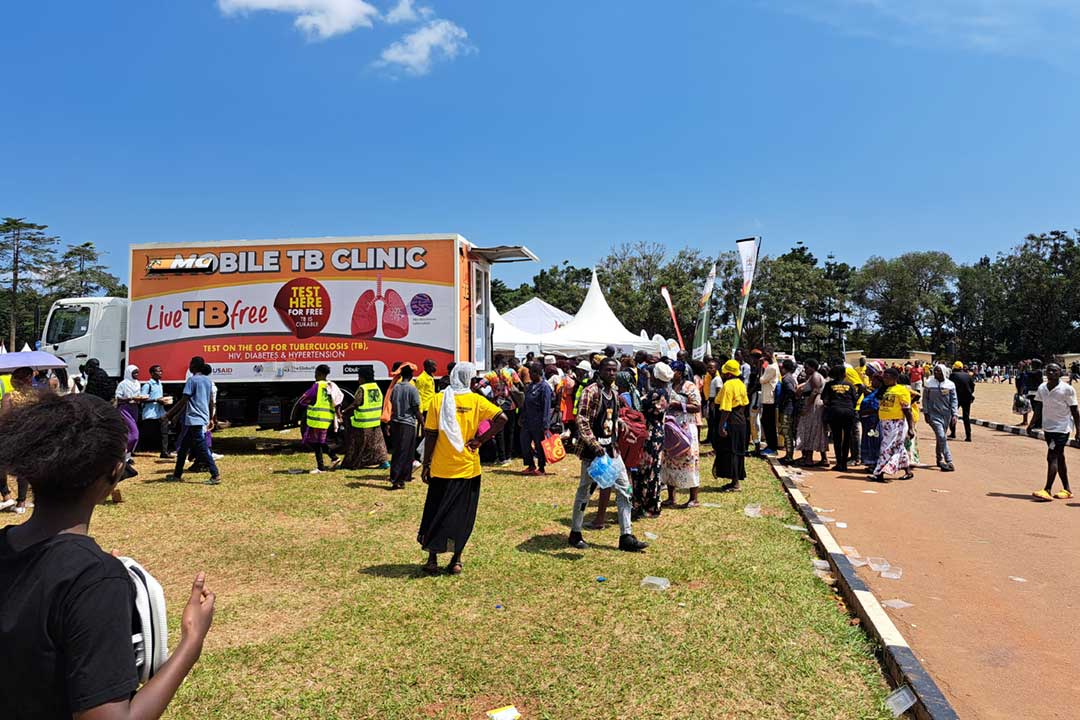
In Malawi, mobile TB screening began with a clear programmatic problem: many people with TB were being missed, including people who had visited health facilities more than once without receiving a diagnosis.
Dr. Kuzani Nigel Mbendera, Deputy Director of Community and Promotive Health Services and program manager for Malawi’s National Tuberculosis, Leprosy and Elimination Programme, explained this challenge during Delft webinar, “From deployment to long-term impact: Building sustainable screening programmes through high-impact innovation, service, and support.”
He spoke on Malawi’s experience using chest X-ray and CAD4TB in Delft OneStopTB X-ray Clinics. It was a practical account of what happens after deployment: how teams adapt algorithms, manage costs, train clinicians, and decide how to use artificial intelligence responsibly in real screening programs.
Why Malawi invested in Delft OneStopTB X-ray Clinics
Malawi introduced Delft OneStopTB X-ray Clinics as an active case finding approach after the country’s TB prevalence survey in 2012 and 2013 showed that many cases were being missed. The intervention was designed to target high-risk groups in both urban and rural areas, especially communities with higher TB burden and groups less likely to be reached through routine facility-based services.
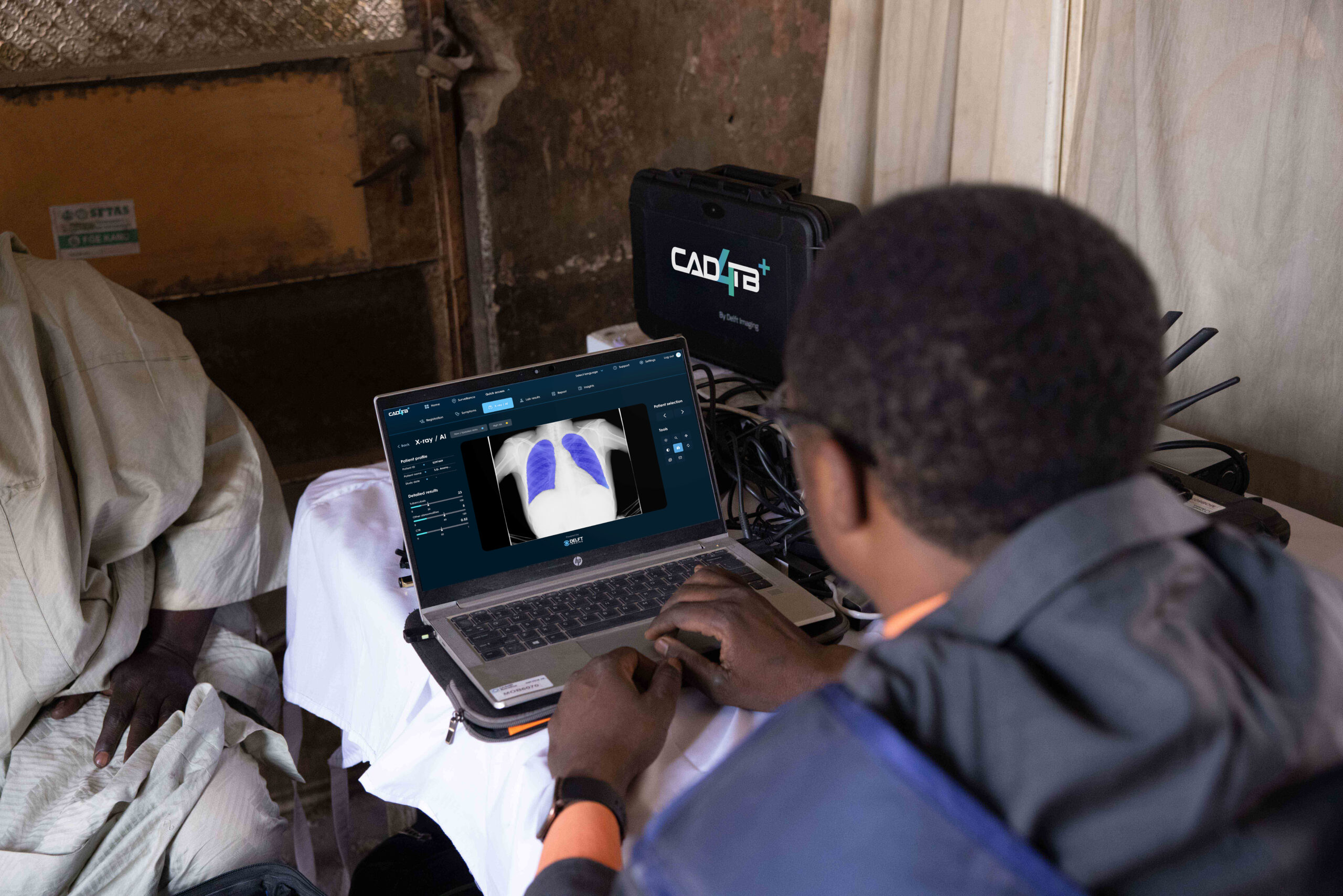
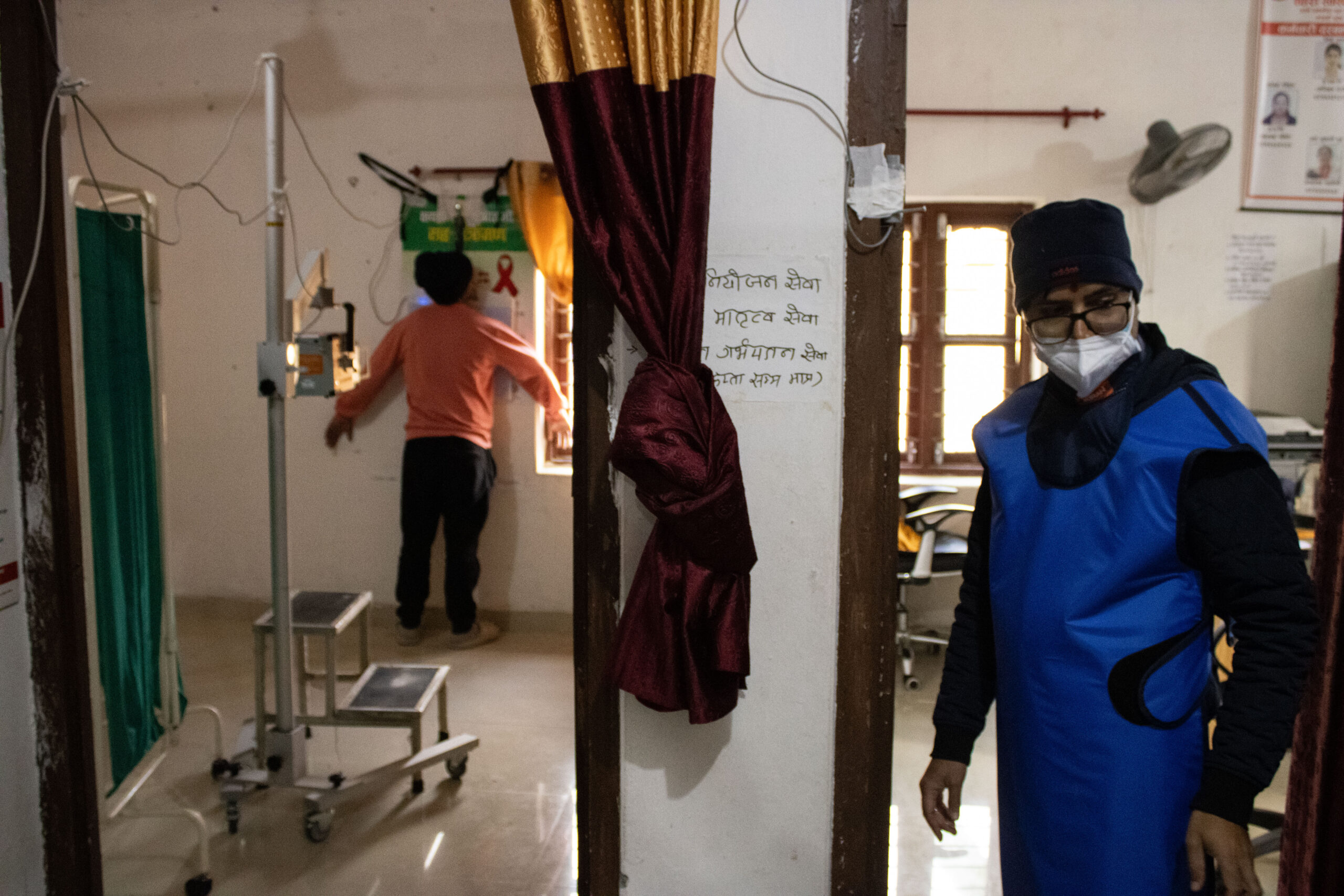
The country initially deployed 7 Delft OneStopTB X-ray Clinics in 2017, followed by 5 additional clinics in 2023. Today, 12 clinics operate in major cities and border districts. These clinics are equipped with digital X-ray systems configured with CAD4TB, and laboratory sections with GeneXpert platforms.
The target groups include people living with HIV, prisoners, miners and mining communities, healthcare workers, industrial workers, migrants, internally displaced people, outpatient department clients, and people in urban hotspot communities.
A screening model built around real-world decisions
Malawi’s approach combines symptom screening with chest X-ray and CAD. For high-risk groups, any cough, fever, night sweats, or weight loss can identify someone as presumptive for TB. For other population groups, the symptom criteria apply when symptoms last more than 2 weeks. Chest X-ray and CAD are used as screening tools for people presenting to the Delft OneStopTB X-ray Clinics.
Dr. Mbendera explained that Malawi originally used a parallel screening algorithm: symptom screening and chest X-ray were both performed, and either symptoms or an abnormal chest X-ray could lead to further testing. Over time, the program moved toward a sequential negative algorithm. In this model, symptom screening comes first. If the person has symptoms, the team proceeds to sputum testing. If not, chest X-ray and CAD help decide whether further investigation is needed.
This shift reflects a key theme in Malawi’s experience: screening algorithms must work in the field, not only in theory.
What CAD changed in Malawi’s TB screening program
Malawi has used CAD4TB in Delft OneStopTB X-ray Clinics since 2018. CAD4TB is currently used in 9 clinics, with the threshold revised from 50 to 60 based on early experience.
The change from a threshold of 50 to 60 was not made lightly. A 2018 review of 2,472 presumptive TB cases showed that TB yield increased as CAD4TB score bands increased. However, lower thresholds created many more presumptive cases and required more GeneXpert tests. For example, in the CAD4TB score band of 50 to 59, 804 presumptive cases produced only 2 TB cases. This helped inform the decision to raise the threshold to 60.
Dr. Mbendera described the trade-off clearly: programs want to find more people with TB, but they must also consider cartridge availability, budgets, staff time, and laboratory capacity. A lower threshold may identify more potential cases, but it also increases the number of people who need confirmatory testing.
Results from 8 years of implementation
From 2018 to 2025, Malawi’s Delft OneStopTB X-ray Clinics screened 1,066,734 people. Of these, 96,399 were identified as presumptive TB cases. GeneXpert testing was performed for 77,322 people, representing 87% testing coverage. In total, the program diagnosed 9,790 TB cases, including 4,330 MTB-positive and rifampicin-sensitive cases, 57 rifampicin-resistant cases, and 5,403 clinically diagnosed TB cases.
The program also generated important evidence on screening performance. In a 2025 active case finding campaign, combining WHO four-symptom screening with chest X-ray and CAD increased TB yield by 6.9 times compared with symptom screening alone. In 2024 and 2025 location-based comparisons, combining symptom screening with chest X-ray and CAD increased TB yield by an average of 5.2 times compared with symptom screening only.
As Dr. Mbendera summarized, “There is no doubt that chest X-ray plus CAD improves the efficiency and effectiveness of TB screening.”
The importance of human oversight
Malawi’s experience also highlights a critical caution. CAD supports screening, but it is not a diagnostic tool on its own. Diagnostic decisions still require bacteriological confirmation and physician review of all clinical evidence.
Dr. Mbendera was clear that programs must avoid conflating X-ray findings with a TB diagnosis. He noted that chest X-ray and CAD should help answer one question: should this person be investigated further? They should not, by themselves, answer whether someone should start treatment.
This distinction matters for patient care, clinical quality, and program credibility.
Lessons for sustainable screening
Malawi’s experience shows that long-term impact depends on more than deploying Delft OneStopTB X-ray Clinics. Programs need clear algorithms, threshold reviews, trained clinicians, quality assurance, reliable laboratory capacity, and routine monitoring of how tools are used.
The country is also looking more closely at geographical mapping of presumptive and confirmed TB cases. This can help teams identify hotspots, avoid repeatedly screening the same areas without updated evidence, and deploy Delft OneStopTB X-ray Clinics where they are most likely to find people with TB.
For other national TB programs, Malawi’s lesson is practical: chest X-ray and CAD can improve TB screening, but sustainable use requires continuous adjustment. Programs must balance sensitivity, cost, laboratory capacity, clinical oversight, and patient-centered decision-making.
That is where long-term impact is built: not just through innovation, but through responsible implementation.