Nigeria’s TB and HIV programs operate at a scale where small efficiency gains can create a public health impact. The challenge is to reach more people, identify where services are most needed, act earlier, and make better use of limited field capacity.
In our webinar, “From deployment to long-term impact: Building sustainable screening programmes through high-impact innovation, service, and support,” Dr. Joseph Eno Daniel, Program Manager for adult and pediatric HIV at the Institute of Human Virology, Nigeria (IHVN), shared how they are using EPCON’s Epi-control platform to improve TB and HIV program implementation.
IHVN implemented the Global Fund Grant Cycle 7 Nigeria TB/HIV Reach Integration and Impact Project, known as N-THRIP. The program supports TB, community TB testing, and prevention of mother-to-child transmission services across Nigeria’s 36 states and the Federal Capital Territory.
The optimization gap in TB and HIV programs
Dr. Daniel described 3 challenges that many large public health programs face: inaccessible communities, limited resources, and delayed data insights. Together, they lead to an optimization gap. Programs may have the mandate to reach underserved populations, but field teams need clearer guidance on where to go, who to prioritize, and how to adapt as conditions change.
This is especially important for populations that are often missed by facility-based or reactive approaches, including pregnant women, adolescent girls and young women, people living in hard-to-reach areas, and other vulnerable groups.
For IHVN, it offered a way to use existing data more effectively. Dr. Daniel described it as “an AI-powered platform that has transformed how we approach TB and HIV case finding in Nigeria.”
Turning surveillance data into field decisions
The Epi-Control platform is an AI-enabled early warning and epidemiological surveillance platform. It applies predictive modeling to demographic, geographic, and health data to identify underserved, high-burden areas down to the ward level.
The workflow is practical. Data from DHIS2 and program sources is fed into the platform. Machine learning algorithms analyze the data and generate hotspot predictions. Community health workers then use these predictions, supported by mapping tools, to conduct targeted door-to-door outreach and screening. Results are reported digitally from the field in real time.
This changes how teams plan outreach. Instead of relying mainly on broad campaigns or local intuition, they can use hotspot predictions to focus their time, staff, and testing resources where the likelihood of finding TB or HIV cases is higher.
What changed after EPCON was introduced
The results presented by IHVN show clear gains in both coverage and efficiency.
At national scale, the platform expanded community-based TB and HIV testing from 514 to 774 local government areas. The number of pregnant women screened increased sixfold, from 64,678 to 428,958. TB case yield improved from 1 percent to 5% positivity, while the presumptive-to-case ratio improved from 74:1 to 19:1.
For TB case finding among pregnant women, IHVN compared pre- and post-EPCON implementation. Pregnant women identified increased from 50,743 to 89,053. Those screened increased from 47,601 to 86,243. Presumptive TB cases increased from 1,434 to 5,120. Confirmed TB cases increased from 2 to 277, described in the presentation as a 38-fold relative improvement in TB case confirmation.
As Dr. Daniel noted, “These numbers represent real lives, real women, real families who have been reached and would have been missed using our conventional and reactive approaches.”
This is the practical value of predictive public health: it helps programs reduce missed opportunities and bring services closer to those who need them.
Combining hotspot prediction with digital X-ray
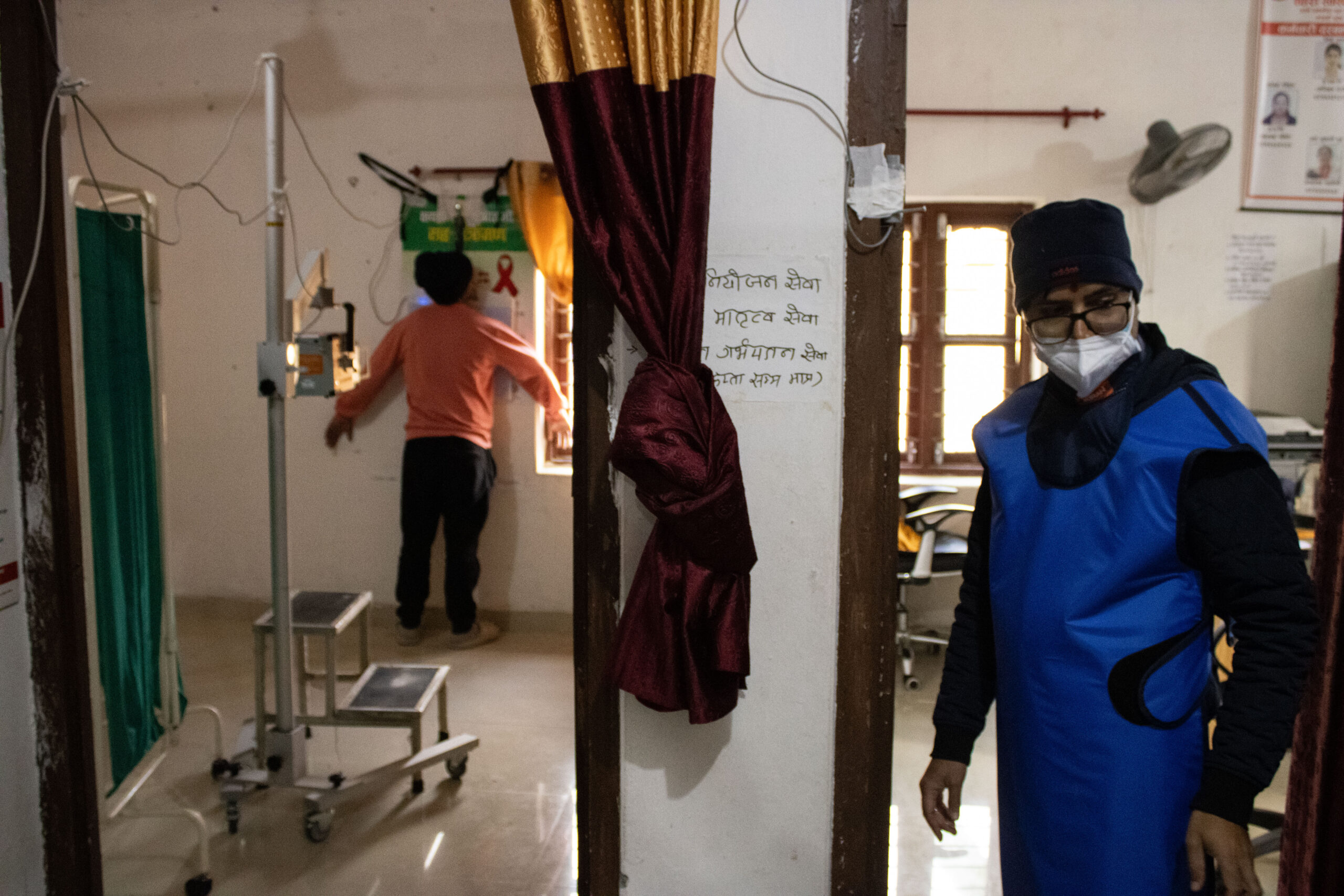
IHVN’s experience also shows how EPCON can strengthen TB screening when combined with AI-assisted portable digital X-ray.
In Katsina State, 59,907 people were screened across 24 local government areas. The intervention confirmed 2,244 TB cases. Screening with Delft Light achieved a 5.5% yield, compared with 3% through symptom screening. It also reduced the number needed to screen from 29 to 18.
In Bauchi State, outreach activities reached 14,671 people and diagnosed 457 TB cases, including 78 bacteriologically confirmed and 379 clinically diagnosed cases. Dr Daniel reported a TB yield of 14% and noted that Delft Light, with CAD4TB, helped identify cases missed by symptom screening alone.
These findings support a wider lesson: AI works best when it strengthens an existing pathway. EPCON helps teams know where to go. Digital X-ray and computer-aided detection help identify who needs further evaluation. Community health workers translate both into action.
A more integrated model for public health programs
Epi-control platform’s strength is its ability to support multi-disease programming. IHVN uses the platform for integrated TB and HIV surveillance, reducing duplication and helping teams respond to overlapping risks in the same communities.
Its use reduced monthly program review time by 65%, supported 100% reporting compliance, and contributed to 11,307 capacity-building engagements for community health workers across states.
These operational improvements matter because sustainable screening programs require reliable data, trained teams, timely reporting, and systems that can support decisions at scale.
What other programs can learn
Dr. Daniel sent a clear message for countries preparing for future funding cycles and large public health programs: integrate AI into existing systems, start with hotspot precision, combine technology with community mobilization, and measure efficiency as well as coverage.
The integration of EPCON’s epi-control platform with Nigeria’s DHIS2 infrastructure shows that AI-supported programs do not need to create parallel systems to be useful. They can strengthen national data systems and help teams act on the information they already collect.
For IHVN, this marks a shift from reactive outreach to predictive public health. Programs can plan earlier, focus better, and reach people who may otherwise remain outside the diagnostic pathway.
As Dr. Daniel concluded, AI-driven screening platforms can help programs “reach more people, optimize efficiency, and save more lives.”