Nepal’s TB program has a strong treatment outcome, but case finding remains a major challenge. According to Dr. Naveen Prakash Shah, chief consultant and former director of Nepal’s National TB Control Center, the country detects far fewer TB and drug-resistant TB cases than estimated. This gap makes active case finding essential, especially among high-risk groups and communities that are difficult to reach through routine services.
During Delft Imaging’s webinar, “From deployment to long-term impact: Building sustainable screening programmes through high-impact innovation, service, and support,” Dr. Shah shared how Nepal is using Delft Light and CAD4TB to expand active case finding, reduce camp costs, and improve participation in TB screening activities.
Nepal’s case-finding challenge
Nepal is estimated to have around 67,000 new drug-sensitive TB cases each year, but 39,151 cases were notified in the most recent reporting period shared in the presentation. This means an estimated 27,849 TB cases, or 41.6%, were missed. Nepal is also considered a high-burden country for drug-resistant TB, with an estimated 2,400 new drug-resistant TB cases and only 625 notified cases. This leaves an estimated 1,775 drug-resistant TB cases, or 74%, missed.
The country’s treatment success rate for drug-sensitive TB is above 90% nationally, which shows that once people are identified and placed on treatment, outcomes are generally strong. The main challenge is finding people earlier.
As Dr. Shah explained during the webinar, “The main problem is the case finding.”
Screening across a difficult landscape
Nepal’s geography makes TB screening operationally complex. The country includes densely populated border areas, urban and peri-urban communities, and remote mountain regions where transport is difficult. Dr. Shah noted that the southern areas bordering India carry a high TB caseload, while mountain communities can be difficult to access with conventional screening services.
This is where portability matters. Delft Light can be transported to areas where standard X-ray systems are difficult to deploy. Dr. Shah described teams carrying the system by backpack. “You can carry it on the back and go even on the motorbike sometimes,” he noted.
For a country with this terrain, screening technology must be more than accurate. It must be practical in the field.
Active case finding with Delft Light and CAD4TB
Nepal uses Delft Light and CAD4TB in active case finding camps for high-risk groups. These activities are supported through the Global Fund and form part of broader efforts that include prison screening, contact tracing, childhood TB screening, screening of drug-resistant TB suspects, private practitioner engagement, and TB case finding through pharmacy referrals.
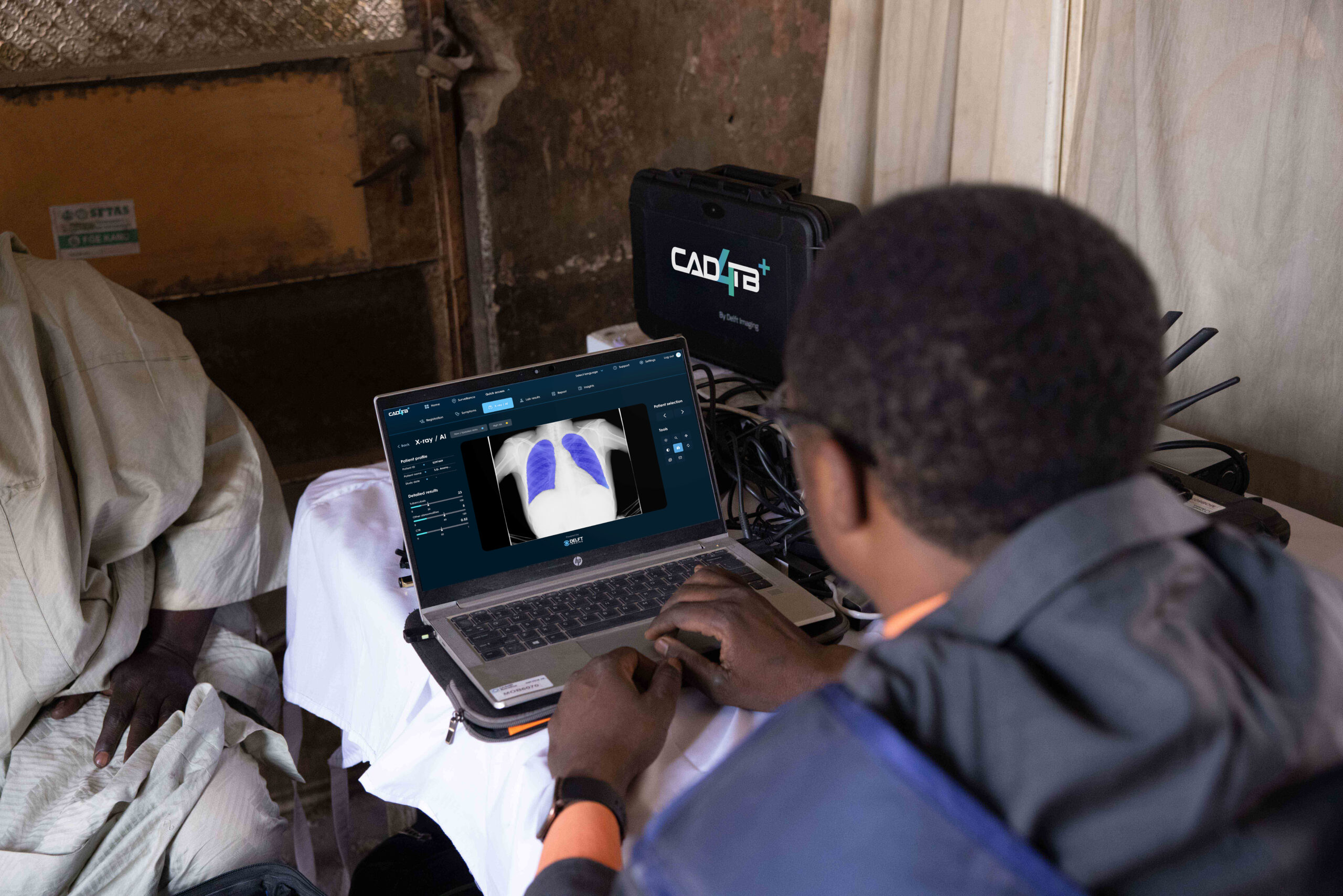
Dr. Shah explained that Delft Light and CAD4TB have changed how camps operate. In the past, if 100 people attended an active case finding camp, around 40 to 45 people might report symptoms and provide samples for molecular testing. With Delft Light and CAD4TB, if only 5 or 6 people have a CAD4TB score above the program threshold, only those samples are sent for molecular diagnosis. This reduces the number of molecular tests while increasing the positivity rate among collected samples.
This has a direct effect on cost and capacity. As Dr. Shah noted, after introducing Delft Light and CAD4TB, “the cost of the camp, the active case finding camp, has reduced significantly.” He added, “So, with the same budget, we are doing more active case finding camps every day.”
Higher participation at screening camps
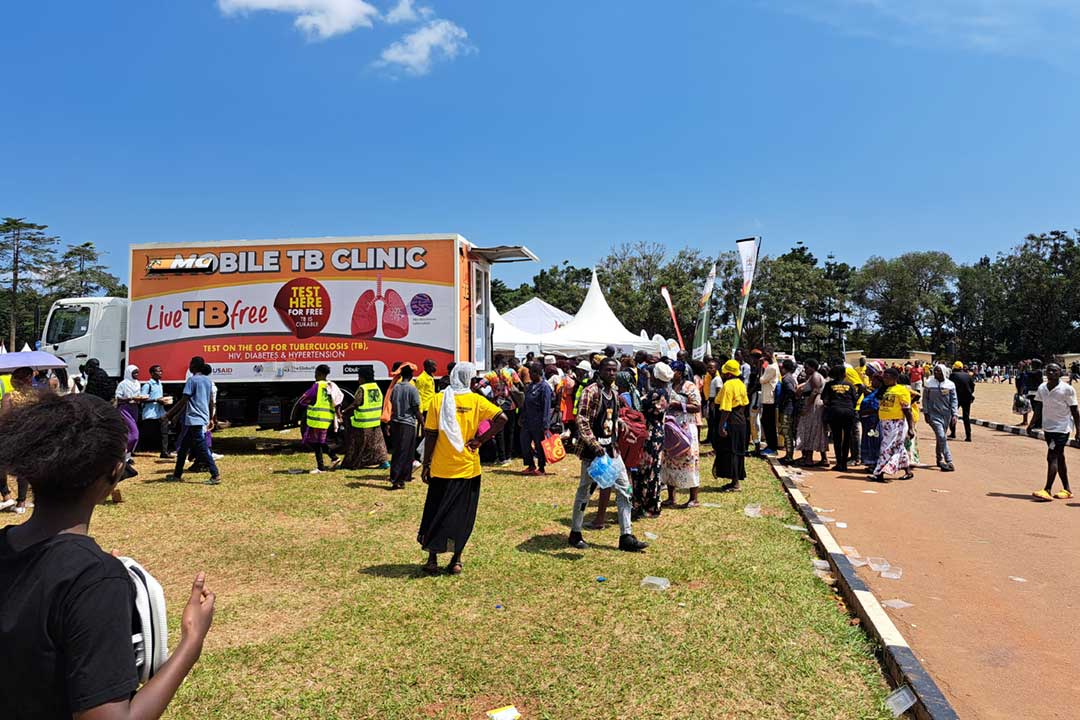
One of Nepal’s most important lessons is that bringing X-ray to the screening site can increase community participation. Dr. Shah explained that more people come to active case finding camps when X-ray services are available on site. “People’s participation has significantly increased after the use of this Delft Light X-ray,” Dr. Shah explained. Many attend because they want to understand whether they may have other lung conditions.
This matters for active case finding. Community participation affects the reach and value of every camp. If more people attend, programs have a better chance of identifying people who would otherwise remain outside the diagnostic pathway.
In Nepal, each of the country’s 7 provinces conducts more than 250 active case finding camps every year. The program has 9 Delft Light and CAD4TB X-ray systems: 1 in each province and 2 at the center. Each functioning machine is used every working day for active case finding, and Nepal has placed a purchase order for 2 additional X-ray systems.
Beyond symptom-based screening
Dr. Shah also highlighted the value of X-ray and CAD4TB for people who may not yet have symptoms. Nepal’s prevalence survey in 2018 and 2019 found that 70% of TB cases were asymptomatic. These cases can be missed when programs rely only on symptom-based screening.
Using Delft Light and CAD4TB helps teams detect possible TB earlier and decide who should receive further testing. It can also support clinical evaluation, help distinguish old and new lung lesions, and reduce false positives from molecular tests that may detect dead bacilli from a past infection.
Dr. Shah also noted wider benefits. During active case finding camps, teams have detected cases of lung cancer and other lung diseases, allowing people to be referred to hospitals for further care.
A practical model for hard-to-reach settings
Nepal’s experience shows how portable X-ray and CAD can strengthen active case finding in settings where geography, cost, and case-finding gaps create daily implementation challenges.
Delft Light and CAD4TB help Nepal bring screening closer to high-risk groups, reduce unnecessary molecular testing, increase participation at camps, and identify people who may be missed by symptom screening alone.
For national TB programs working across remote or varied terrain, the lesson is clear: screening solutions need to be clinically useful, operationally practical, and easy to deploy where services are most needed. In Nepal, that combination is helping the program move closer to finding the people with TB who are still being missed.