2024
The utilization of the OneStopTB mobile clinics, EasyDR X-ray systems and the CAD4TB software amongst a pilgrim population in Uganda has also been covered by the new channel NewVision in Uganda.
A Gavi’s article dives into how Uganda is deploying these solutions to bring TB screening to remote areas, thereby overcoming healthcare barriers and benefiting underserved communities.
In 2024, Monitor reported on Uganda’s tuberculosis mobile screening campaign, which features 17 Delft Light systems and five mobile clinics to improve TB detection and treatment access, boosting public health outcomes in vulnerable communities.
2025
Kitgum General Hospital in Uganda received a major boost in its diagnostic capabilities with the deployment of the Delft Light with CAD4TB software. After nearly two years without a functioning X-ray machine, the hospital can now resume TB screening and diagnosis, especially in hard-to-reach, resource-limited settings. Dr. Geoffrey Okello, the hospital’s Medical Superintendent, highlighted the expected impact on care delivery and patient outcomes. The initiative aligns with Uganda’s efforts to expand equitable access to essential health services. Read more via The Independent.
Same year (2025), reported by The Kampala Post, Uganda expanded its national TB response with the deployment of tuk-tuk–mounted mobile units equipped with Delft Light portable X-ray systems and CAD4TB software. Delivered to the Ministry of Health with support from USAID and the U.S. Government, the new fleet includes 48 portable X-ray machines, 33 TB-LAMP platforms, and 33 Mobile XLAMP tricycles – reaching 68 districts and aiming to screen over 500,000 people in remote areas. This marks a continuation of Uganda’s leadership in using AI-powered mobile diagnostics to close detection gaps and move closer to TB elimination.
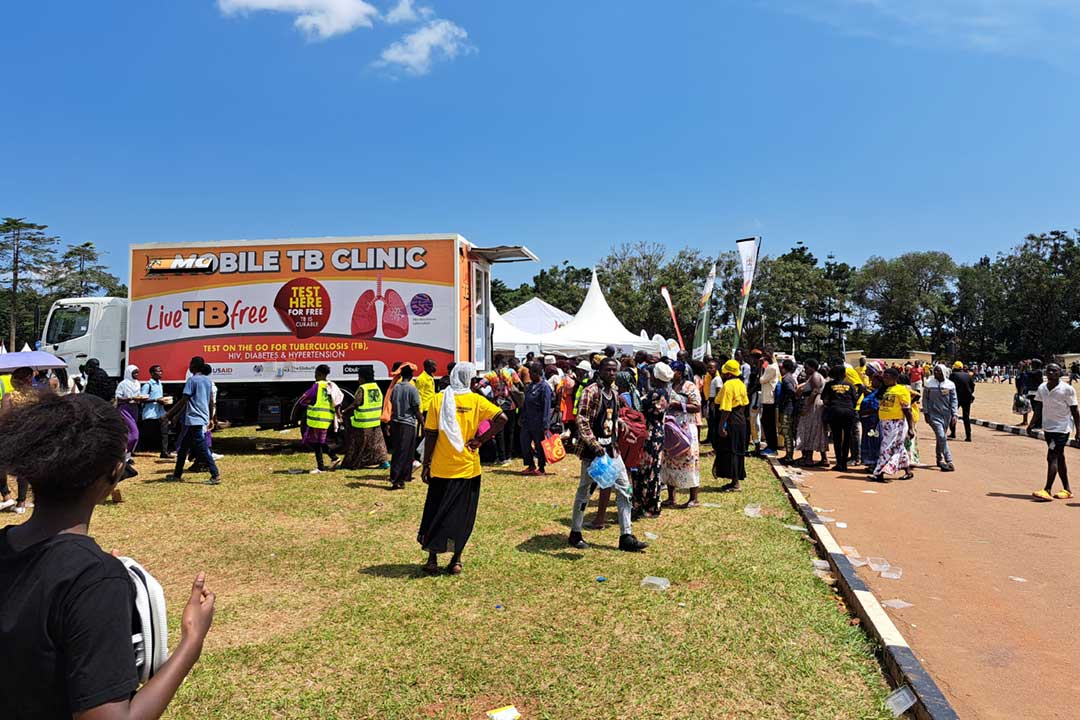
Later in December 2025, reported by Salt Media Uganda, Uganda’s Ministry of Health launched 11 additional mobile tuberculosis (TB) clinics on December 15, bringing the national fleet to 16 to serve communities across all 16 regions. Supported by the Global Fund, the clinics feature AI-powered X-ray systems and are equipped to provide on-site screening, diagnosis, treatment, and counseling, particularly in hard-to-reach and underserved areas.
2026
In 2026, New Vision reported on the deployment of a UGX 1.2 billion mobile tuberculosis (TB) clinic to Soroti Regional Referral Hospital to serve communities across the Teso sub-region. The clinic is equipped with computer-aided diagnostic software and will support screening in Soroti, Kapelebyong, Amuria, Serere, and Kaberamaido. The article reported 476 TB cases in the final quarter of 2025, with young adults aged 20 to 25 identified as the most affected group. The mobile unit is intended to support earlier detection and improve access to diagnostics in underserved areas.
In the same year (2026), the Independent reported on the deployment of a mobile TB clinic to Soroti Regional Referral Hospital following the identification of 467 TB cases in the Teso sub-region over a three-month period. The clinic uses digital chest X-ray to support same-day TB screening, diagnosis, and treatment initiation. It also provides HIV, diabetes, and hypertension testing during community outreach. Health officials reported that approximately 20 out of every 1,000 people screened test positive for TB, highlighting the need for continued early detection efforts in the region.