

Nigeria – TB Detection in correctional centers with Delft Light & CAD4TB
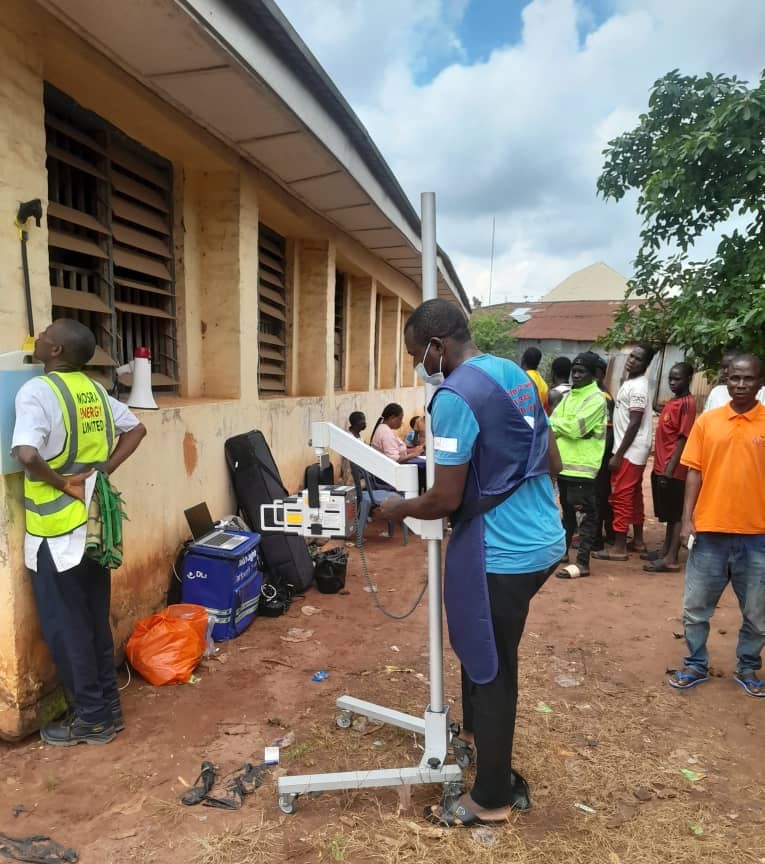
The combined maximum capacity of two major correctional centers in Oyo State is 590 inmates. However, the actual inmate population has exceeded 1,500, significantly increasing the risk of TB spread among inmates. Consequently, the project introduced the shift from passive to active case-finding in these correctional centers.
Passive case finding phase
Passive TB case finding was conducted in two correctional centers from 2019 to 2021.
Routine TB screening rollout
Routine screening was implemented from 2022 to 2023 using symptom screening and AI-enabled X-ray.
Portable X-ray with AI
Delft Light digital X-ray systems with CAD4TB supported active screening.
Confirmatory testing and review
Presumptive TB cases were tested with GeneXpert, with radiologist review of negative results.
During the period from 2019 to 2021 (36 months),
In the subsequent period from 2022 to 2023 (24 months), screening was conducted using both W4SS, Delft Light and CAD4TB
- This indicates a 237% increase in TB case detection when combining symptom screening with X-ray and AI, despite the shorter time frame.
- Active case-finding through combining W4SS and portable X-ray machines with CAD4TB significantly enhanced TB case detection in correctional centers.
- These results underscore the importance of addressing the challenges associated with TB spread among inmates.
REFERENCE: Ajayi, O. et al (2024, November 12-16). Role of active case finding and artificial intelligence in significantly increased TB case finding numbers in correctional centers: USAID TB-LONG3 project experience in Oyo State [Presentation]. The Union World Conference on Lung Health, Bali, Indonesia.