2015
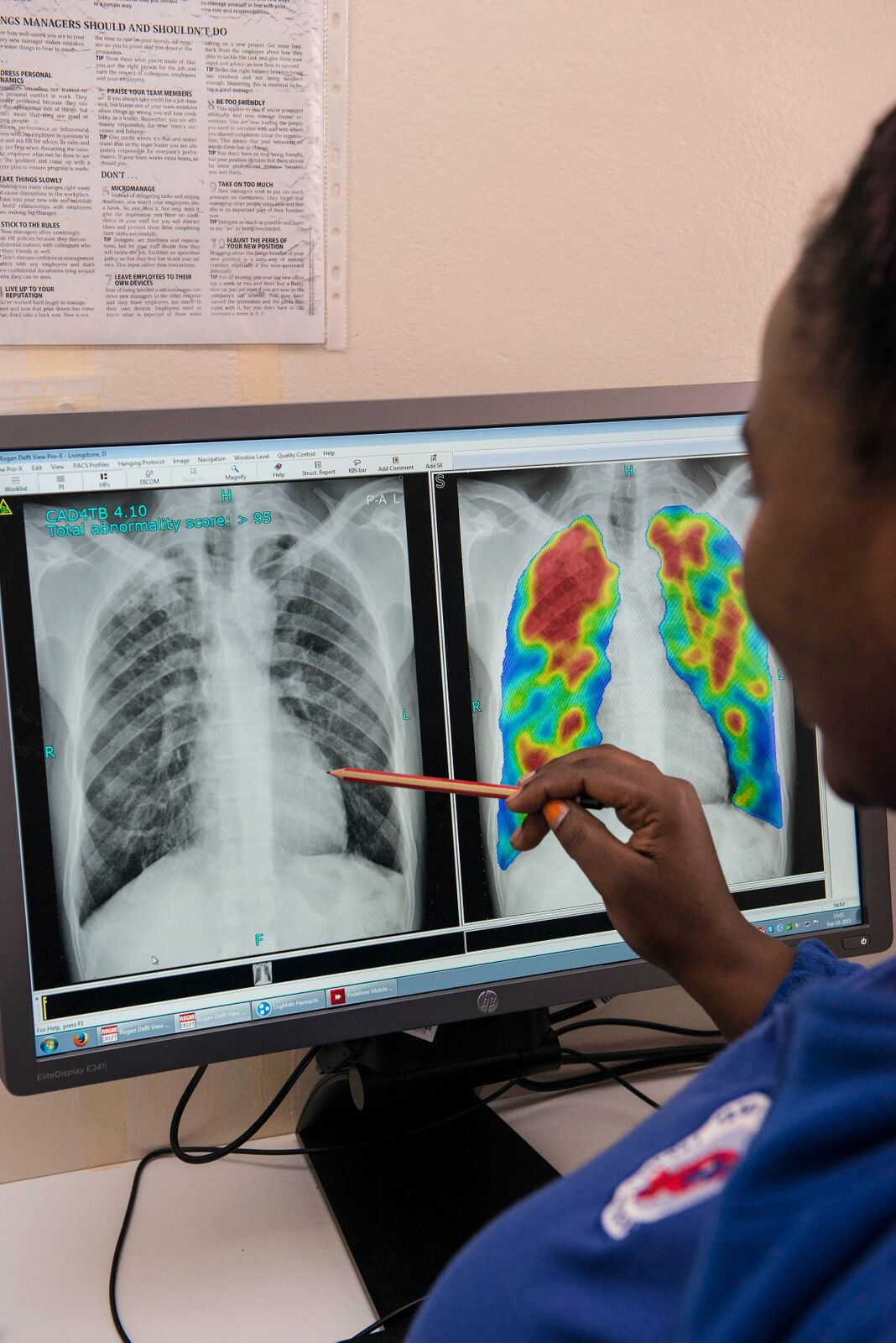
A study proved that pre-screening with CAD software (CAD4TB) could increase patient throughput by up to 250% in a typical screening setting. Different thresholds with objective and reproducible results can be chosen with automated reading. A threshold can be set to obtain the desired sensitivity, specificity or throughput accordingly. This makes CAD for TB software highly invaluable in resource-constrained settings. The paper remarked that the CAD software for TB screening could save cost and time in a point-of-care setting. The authors further hypothesised that the algorithm’s value would be even higher in active case-finding scenarios and sputum-scarce cohorts, but it would require further studies.
2016
According to a later 2016 study, the combination of CAD software (CAD4TB) and clinical information offers improved accuracy and increased specificity compared to using either type of information.
2020
A 2020 research showed that using a digital interpretation tool, such as artificial intelligence software (CAD4TB) or a second reader well-equipped in radiological diagnosis of TB, may improve the performance of the TB screening algorithm.
2021
Similarly, a recent 2021 study showed that CAD4TB (version 5) perform akin to an expert radiologist in triaging participants for diagnostic sputum testing.
2022
In addition to the multiple research papers on CAD4TB, many have researched the use of Delft Imaging’s computer-aided detection for Silicosis software, also known as CAD4Silicosis.
Recently, in 2022, a study showed that while the current ability of CAD to differentiate between TB and Silicosis is still limited, its use as a mass screening tool for both diseases shows considerable promise.
Another study in the same year proved that the CAD4Silicosis software met the high accuracy benchmark of 90% sensitivity and 70% specificity. It was found that the CAD system can detect silicosis in a population with a high background prevalence of prior TB.
2023
A 2023 study showed that the performance of CAD4TB v7 to identify TB in children (<13 years) significantly improved after fine-tuning it with a set of well-characterised paediatric chest x-rays. The study suggested that CAD has the potential to be a useful additional diagnostic tool for paediatric tuberculosis.
2024
A 2024 study evaluating C-reactive protein and computer-aided analysis of chest X-rays as tuberculosis triage tests in Lesotho and South Africa concluded that CAD4TBv7 is an accurate triage test for patients with tuberculosis symptoms in areas with a high burden of tuberculosis and HIV.